

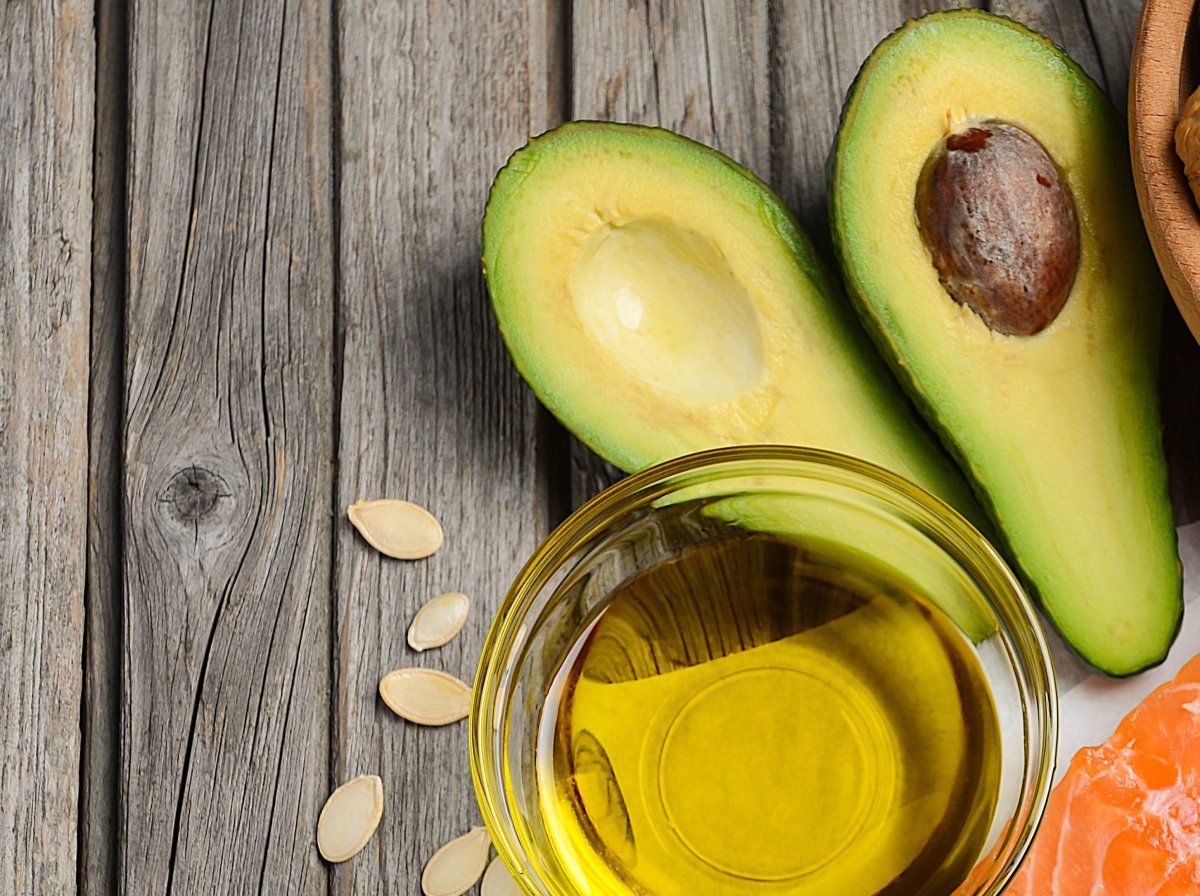
Avocado oil has moved from speciality shelves to mainstream supermarkets over the past few years, marketed for both cooking and skincare. Some of the enthusiasm is justified; some of it runs ahead of the evidence. Here is a measured look.
What is avocado oil?
Avocado (Persea americana) is unusual among fruit in being rich in fat rather than sugar. After ripening, the flesh is pressed to extract oil — cold-pressed, unrefined versions retain more nutrients and a green colour and grassy flavour, while refined versions are paler and more neutral.
Nutritional profile
One tablespoon (about 14 g) provides roughly 124 calories, entirely from fat, with no protein or carbohydrate. The composition is what makes it interesting:
- Around 70% monounsaturated fat, mostly oleic acid — the same fatty acid that dominates olive oil
- Vitamin E, a fat-soluble antioxidant
- Lutein, a carotenoid concentrated in the retina
- Small amounts of polyunsaturated and saturated fat
The evidence, honestly assessed
Heart health — reasonable, indirect evidence. Replacing saturated fat with monounsaturated fat improves cholesterol profiles, and this is well established across the research. Avocado oil is a good source of monounsaturated fat, so it fits that pattern. However, much of the research specifically on avocado oil is in animals or small studies, and it has nothing like the human evidence base behind olive oil. Treat it as a good option among unsaturated oils rather than a uniquely protective one.
Nutrient absorption — good evidence. Fat improves absorption of fat-soluble vitamins and carotenoids. Adding avocado or its oil to a salad measurably increases how much of the carotenoids you take up from the vegetables.
Eye health — plausible. Lutein accumulates in the macula and higher dietary intake is associated with better long-term eye health. Avocado oil contains lutein, though leafy greens and egg yolks provide considerably more.
Arthritis — partially supported, but often misreported. The studies here concern avocado–soybean unsaponifiables (ASU), a specific concentrated extract taken as a supplement, which has shown modest benefit in osteoarthritis. This is not the same as cooking with avocado oil, and the results should not be transferred across.
Skin — limited evidence. A small study of a cream containing avocado oil and vitamin B12 reported improvement in psoriasis. That is one study of a specific formulation, not evidence that avocado oil treats skin conditions. As a general moisturiser it is perfectly reasonable.
Where it genuinely excels: cooking
This is the most practical advantage. Refined avocado oil has a very high smoke point — around 250°C — higher than extra virgin olive oil, butter or most seed oils. Heating oil beyond its smoke point degrades it and produces unpleasant compounds, so a high smoke point makes avocado oil well suited to roasting, searing and stir-frying, where it stays stable.
Cold-pressed, unrefined avocado oil has a lower smoke point and is better used as a finishing oil or in dressings.
Practical considerations
- Cost. Considerably more expensive than rapeseed or olive oil for broadly similar benefits.
- Authenticity. Independent testing has repeatedly found avocado oil products adulterated with cheaper oils or already rancid. Buy from reputable brands and check the harvest or best-before date.
- Calories. All oils are energy-dense. "Healthy fat" still counts toward your intake.
- Storage. Keep it cool, dark and tightly sealed.
The bottom line
Avocado oil is a genuinely good unsaturated fat with an unusually high smoke point, making it useful for high-heat cooking. It is not a superfood, and it will not treat any medical condition. Used in place of butter or saturated fats, as part of a varied diet, it is a sensible choice — alongside olive and rapeseed oil rather than instead of them.
Checking your cholesterol
Rightangled's home blood tests can measure cholesterol and lipid profiles, processed by accredited UK laboratories. Results are reviewed by our clinical team, which includes GPhC-registered independent prescribers, with medical oversight from our doctor, Dr Abdullah.
Verify us with the General Pharmaceutical Council (registration 9011933), see our LegitScript certification, and read reviews on Trustpilot.
Related reading: heart attacks and diet.
This article is for general information and does not replace personalised medical advice.



Share:
A Quick Guide on the Keto Diet
Is a Low-Carb diet safe for you?