

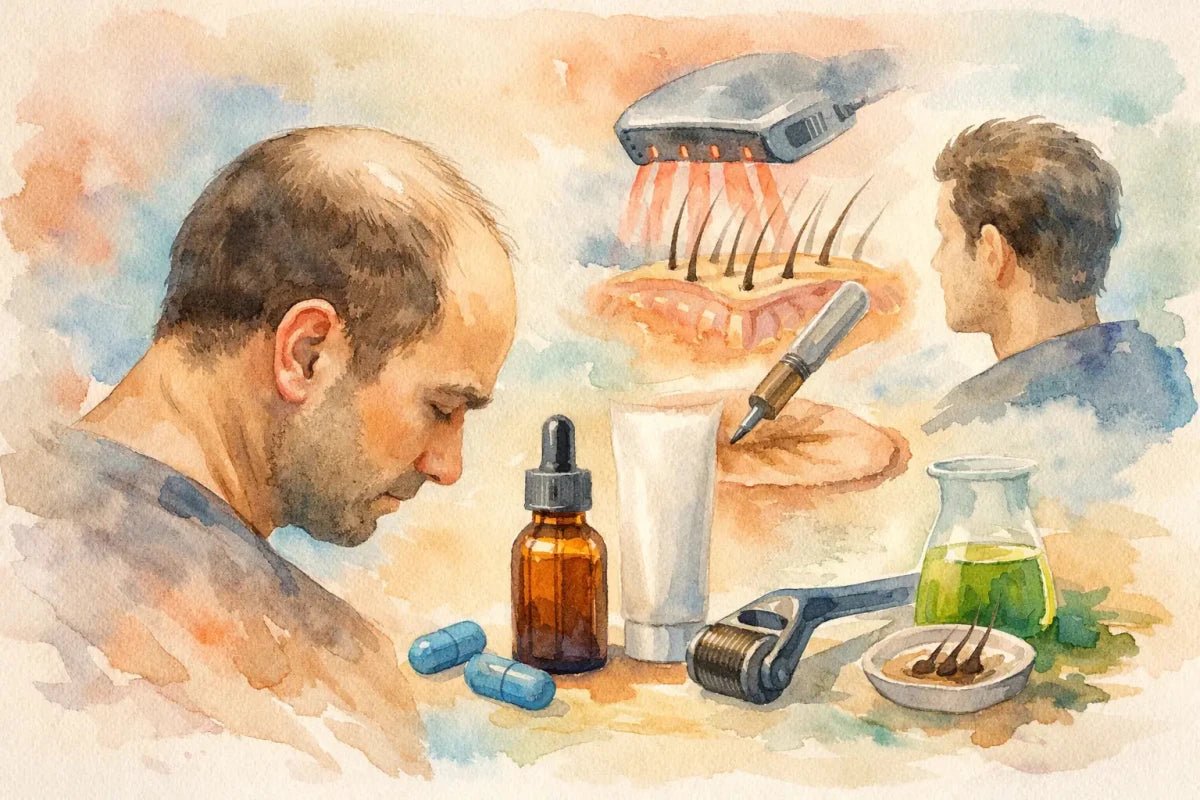
A receding hairline is not always a sign that you need to act immediately. But when the temples continue to move back, the crown becomes more visible or shedding is clearly accelerating, getting the right advice early gives you more options. The best treatments for male pattern baldness are those that slow the underlying hair loss process, protect the hair you still have and fit realistically into your routine.
Male pattern baldness is common, but that does not make every treatment suitable for every person. The right approach depends on your pattern of loss, medical history, age, treatment preferences and how quickly you want to see change. Prescription treatment can be highly effective for eligible men, provided it is used consistently and with appropriate clinical oversight.
What causes male pattern baldness?
Male pattern baldness, also called androgenetic alopecia, is driven by a combination of genetics and hormones. In people who are genetically susceptible, hair follicles become sensitive to dihydrotestosterone, known as DHT. Over time, DHT shortens the hair growth cycle and causes affected follicles to produce progressively finer, shorter hairs.
It usually follows a recognisable pattern: recession at the hairline, thinning around the crown, or both. Unlike sudden patchy hair loss, it tends to develop gradually. Treatment works best before follicles have been inactive for a long time, which is why waiting until large areas are completely bare can limit the results you can achieve with medication alone.
The best treatments for male pattern baldness
Finasteride: a prescription option that targets DHT
Finasteride is one of the most established prescription treatments for male pattern baldness. It works by reducing the conversion of testosterone into DHT, lowering the level of the hormone that contributes to follicle miniaturisation. For many men, this can slow further loss and, in some cases, support thicker-looking hair over time.
It is generally taken as a daily tablet and requires a clinician-led assessment. Results are gradual rather than immediate. Some men notice less shedding within a few months, while visible improvement may take six to 12 months. Continued treatment is usually needed to maintain the benefit, as stopping allows the underlying hair loss process to resume.
Finasteride is not right for everyone. Possible side effects can include changes in libido, erectile difficulties, changes in ejaculation and mood-related symptoms. These effects are uncommon, but they should be discussed openly before treatment starts. A prescriber should also know about your wider health, medicines and any previous history of depression or sexual dysfunction.
Minoxidil: a topical treatment for ongoing use
Topical minoxidil is applied directly to the scalp, commonly as a foam or solution. It does not reduce DHT. Instead, it helps encourage follicles to remain in the growth phase for longer and can improve hair density for some users.
Minoxidil can be a useful choice for men who do not want, or cannot take, oral prescription treatment. It is also often used alongside finasteride because the two treatments work in different ways. Consistency matters: it is normally applied once or twice daily depending on the product instructions, and missing applications regularly can reduce the chance of a worthwhile result.
An increase in shedding can occur during the first few weeks. This can be unsettling, but it may reflect hairs moving through the growth cycle rather than permanent worsening. Scalp irritation, flaking and itching can also happen, particularly with some solution formulations. If irritation persists, seek advice rather than simply pushing through it.
Oral minoxidil is sometimes prescribed off-label for hair loss, but it is not a casual alternative to topical treatment. Because it can affect blood pressure and cause side effects such as palpitations, swelling or unwanted body-hair growth, it needs careful medical consideration and follow-up.
Combination treatment: often the practical first-line route
For suitable men, finasteride and topical minoxidil used together can offer a stronger approach than either treatment alone. Finasteride addresses DHT-related follicle shrinkage, while minoxidil supports the growth cycle. The trade-off is commitment: taking a tablet and applying a topical product can feel demanding, particularly when life is busy.
A practical plan is one you can maintain. If twice-daily application is unrealistic, discuss whether a once-daily routine is appropriate for the product you are using. Adherence over months matters more than an overly complicated routine that is abandoned after a few weeks.
Hair transplant surgery: redistribution, not a cure
A hair transplant moves healthy follicles, usually from the back and sides of the scalp, to thinning areas. It can create a natural-looking result in the right candidate, particularly where the hairline or crown has become significantly sparse.
However, surgery does not stop male pattern baldness from progressing in untreated areas. Many people are advised to consider medical treatment before and after a transplant to help preserve their existing hair. The quality of the donor area, the likely future pattern of loss and the experience of the surgical team all matter. A cheap procedure without proper planning can leave an unnatural hairline or insufficient donor hair for future needs.
Lower-level laser therapy and PRP: options with less certainty
Lower-level laser devices and platelet-rich plasma, often called PRP, are offered by some clinics. They may help some people, but the evidence base is less consistent than it is for finasteride and minoxidil. Results can vary widely, and PRP usually involves repeat appointments and ongoing cost.
These treatments may suit someone who wants an additional option or who cannot use standard medicines, but they should not be presented as guaranteed replacements for established treatment. Ask what outcomes are realistic, how many sessions are recommended and what you will pay over a full year rather than per appointment.
Treatments that do not address the cause
Hair-thickening shampoos, supplements and scalp serums can improve the feel or appearance of hair, but they usually do not prevent DHT-driven follicle miniaturisation. A good shampoo may support scalp comfort, and correcting a genuine nutritional deficiency can be worthwhile, but neither should be mistaken for a proven treatment for male pattern baldness.
Be especially cautious with products that promise rapid regrowth, permanent results or a complete cure. Hair growth is slow, and credible providers will explain both the possible benefits and the limits of treatment.
How to choose the right treatment plan
The first step is confirming that you have male pattern baldness. Sudden shedding, scalp inflammation, circular patches, pain or hair loss after illness may have a different cause and need a different assessment. A clinician can review your symptoms, photographs, medical history and current medication to identify whether prescription treatment is appropriate.
Once treatment begins, take consistent photographs in the same lighting every three months. Day-to-day mirror checks are unreliable and can make normal variation feel like failure. Photos make it easier to judge whether shedding has settled, density is improving or your plan needs review.
Be patient with the timeline. Most evidence-based treatments need at least three to six months before early change can be assessed fairly, with fuller results often taking up to a year. Maintaining existing hair is also a positive outcome, even if you do not see dramatic regrowth.
For UK adults who value a discreet route to care, an online clinical assessment can help establish eligibility for regulated treatment without unnecessary delays. Rightangled offers doctor-led assessments and prescription delivery for suitable patients, allowing treatment to fit around work and everyday life.
The most useful next step is not chasing the newest miracle product. It is getting an accurate assessment, choosing a treatment you can use consistently and giving it enough time to show what it can do.



Compartir:
Can You Get Prescriptions Without Seeing a Doctor?
UK Guide to Regulated Online Pharmacies